Metal Roofing vs. Asphalt Shingles: A Cost and Durability Comparison
Metal Roofing vs. Asphalt Shingles: A Cost and Durability Comparison
Choosing between metal roofing and asphalt shingles is not simply about which product lasts longer. It is a decision about upfront cost, ownership horizon, climate, architectural style, repairability, and installation quality.
Here is the practical answer: asphalt shingles usually cost less initially and are easier to repair locally. Metal roofing generally requires a larger investment but may deliver a longer service life and fewer full replacements when correctly designed, installed, and maintained.
The better option depends on how long you expect to own the home and what you want the roof to accomplish.
Metal Roofing vs. Asphalt Shingles at a Glance
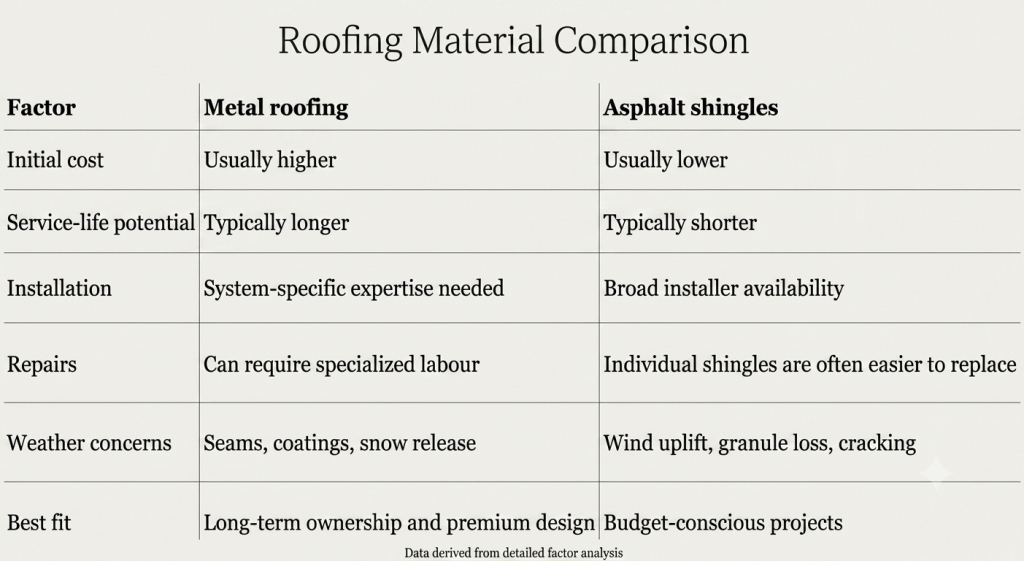
These are general tendencies. Roof pitch, ventilation, underlayment, flashing, product grade, and workmanship can matter as much as the visible material.
Know What You Are Comparing
Metal Roofing Is a Category
Residential metal roofing includes concealed-fastener standing seam, exposed-fastener panels, and metal shingles. Materials may include coated steel, aluminum, copper, and zinc.
A standing-seam system behaves differently from an exposed-fastener panel. Metal thickness, coating, seam design, fastening method, and compatibility between metals affect cost and durability. The Metal Construction Association notes that steep-slope metal products come in numerous profiles, finishes, and metals.
Asphalt Shingles Also Vary
Options include three-tab, laminated architectural, premium designer, and impact-resistant shingles. An asphalt roof is also more than its surface. ARMA identifies shingles, underlayment, ice-and-water barriers, starters, and hip-and-ridge materials as parts of a complete system.
Comparing an entry-level shingle quote with premium standing seam is therefore misleading.
Upfront Cost: Asphalt Usually Wins
Asphalt shingles generally cost less because the materials are widely available, installation is familiar, and the contractor pool is larger. Industry comparisons consistently identify affordability as asphalt’s main advantage.
Metal can cost more because it may require custom fabrication, specialized flashing, trained installers, premium coatings, and snow-retention details. Valleys, dormers, penetrations, steep slopes, access, and deck repairs can widen the gap.
Request itemized quotes covering tear-off, disposal, deck repairs, underlayment, ventilation, flashing, snow guards, and warranties. For broader planning, review these roofing options for luxury custom homes in Canada.
Lifecycle Cost: When Metal Can Catch Up
The lowest installation price is not always the lowest ownership cost. Compare:
Initial installation + maintenance + repairs + likely replacements − remaining value
Consider a homeowner planning to remain for 35 years. Asphalt creates a lower starting cost but may require replacement during that period. Metal costs more initially but may reduce replacement frequency. Neither outcome is guaranteed.
A Metal Construction Association study concluded that a specific unpainted aluminum-zinc-coated steel standing-seam system could exceed 60 years when designed and installed using best practices in applicable environments. That finding does not apply automatically to every residential metal roof, but it shows why system details matter.
Durability: How Each Roof Ages
Asphalt Shingles
Shingles can be affected by ultraviolet exposure, thermal cycling, hail, wind, poor ventilation, installation errors, and seal deterioration.
IBHS research identifies sealant strength as important to wind performance, especially after hail exposure. Its impact testing also shows that products carrying similar marketing labels do not always perform identically under realistic hail simulation.
Watch for lifted tabs, missing shingles, cracking, curling, exposed fasteners, granules in gutters, and damaged flashing.
Metal Roofing
Metal avoids granule loss and rot, but it can experience coating wear, corrosion, loose exposed fasteners, failed sealants, poorly formed seams, or movement around penetrations.
Do not assume all metal systems perform equally. Concealed-fastener standing seam and exposed-fastener panels use different attachment and weather-management strategies.
Snow, Ice, Wind, and Hail
Metal can release snow suddenly. Snow guards may be needed above entrances, walkways, lower roofs, vehicles, and landscaping. They should be designed for the panel system and local snow loads.
Asphalt’s texture may hold snow longer, but neither material prevents ice dams. Air sealing, insulation, ventilation, roof geometry, and ice-and-water protection are critical. NRCA notes that ice damming can occur without gutters, particularly near lower slopes, valleys, chimneys, and penetrations.
For wind, compare tested ratings and fastening requirements. For hail, asphalt may bruise or lose granules, while metal may dent without leaking. Neither is hail-proof.
Maintenance and Repairs
Neither roof is maintenance-free.
Inspect asphalt for lifted or missing shingles, cracking, granule loss, moss, debris, and failed flashing. Inspect metal for seam issues, loose fasteners, damaged coatings, failed sealants, corrosion, and problems around penetrations or snow guards.
Localized asphalt repairs are often simpler. Metal repairs may require matching an older colour or profile and finding a contractor familiar with the system. Periodic cleaning can also help protect metal coatings and appearance.
Energy Efficiency: Avoid the Common Myth
Metal is not automatically energy-efficient, and asphalt is not automatically inefficient.
ENERGY STAR explains that cool-roof performance depends on solar reflectance and thermal emittance. Colour, coating, insulation, air sealing, ventilation, roof-deck design, and climate influence actual results.
A reflective metal finish may reduce solar heat gain, but savings vary. A well-insulated asphalt roof can outperform a poorly detailed metal assembly. Early coordination is easier when technology improves custom-home design and construction efficiency.
Appearance, Noise, and Architectural Fit
Standing seam works especially well with contemporary, minimalist, and modern farmhouse architecture. Metal shingles can imitate slate, shake, or tile. Asphalt offers broad colours and dimensional profiles for traditional, transitional, and contemporary homes.
Compare modern farmhouse and traditional Craftsman styles and use these exterior design tips for luxury GTA homes to coordinate the roof with masonry, siding, windows, and gutters.
Metal-roof noise is often overstated. Decking, underlayment, insulation, attic space, and ceiling construction largely determine what occupants hear.
Read the Warranty, Not Just the Headline
A long warranty does not always mean full replacement coverage for that entire period. Check whether coverage is prorated and whether it includes labour, removal, disposal, wind, hail, coatings, transferability, registration, and maintenance requirements.
NRCA has cautioned that “lifetime” asphalt-shingle warranties are marketing terms and should not be treated as proof that a roof will last forever.
Which Roofing Material Is Best for You?
Choose asphalt shingles when affordability, contractor availability, and simple repairs are priorities. They often suit conventional homes and shorter ownership horizons.
Choose metal when you can manage the higher first cost, plan to own the home long term, value its architectural appearance, and have access to a system-specific installer.
A mixed strategy can also work: asphalt on the main roof with standing-seam metal over porches or lower accent roofs.
The installation team remains decisive. The advantages of hiring an experienced custom-home builder include better coordination between structure, ventilation, drainage, flashing, and exterior design.
Frequently Asked Questions
Is a Metal Roof Worth the Additional Cost?
It can be for long-term owners who value durability, design, and fewer replacements. Compare lifecycle cost, not the opening quote alone.
Can Metal Roofing Be Installed Over Shingles?
Sometimes, when codes, manufacturer instructions, deck condition, moisture risks, and roof geometry allow it. The existing roof must be inspected first.
Does Metal Roofing Attract Lightning?
No. The Metal Roofing Alliance states that metal roofs do not attract lightning simply because they are metal.
Which Option Is Better for Hail?
Neither is universally better. Compare tested products, local exposure, insurance requirements, and repair implications.
Are Metal Roofs Noisy in Rain?
Not necessarily. The complete assembly—including decking, insulation, attic space, and ceilings—strongly influences sound.
Which Option Improves Resale Value?
Either can support resale when attractive, properly installed, and well maintained. Buyer preferences and local market conditions determine the actual premium.
Conclusion
Asphalt shingles usually offer the strongest upfront affordability. Metal roofing may provide greater longevity and lower replacement frequency.
The right choice is the system that fits your climate, architecture, budget, ownership horizon, and contractor expertise.
Planning a custom home or roof upgrade in Toronto or the GTA? Contact Woodcastle Homes to compare materials, warranties, ventilation, weather protection, and lifecycle costs before making a long-term investment.
