Window Selection Guide: Triple-Glazed Options for Ontario Winters
Window Selection Guide: Triple-Glazed Options for Ontario Winters
Triple glazing is often marketed as the automatic premium choice for an Ontario home. But a third pane cannot compensate for a conductive frame, excessive air leakage, the wrong solar-gain specification, or poor installation.
That matters because windows, doors, and skylights can account for up to 35% of a home’s heat loss. Triple-glazed windows can improve winter comfort and reduce heat transfer, but buyers should compare the entire window—not pane count alone.
Are Triple-Glazed Windows Worth It in Ontario?
For many new custom homes, yes.
Triple glazing is especially valuable for large window areas, exposed or lakefront properties, high ceilings, bedrooms facing busy roads, and rooms where people sit close to the glass. It can also suit high-performance homes and long-term owners.
An efficient double-glazed window may remain reasonable for smaller openings or budget-sensitive spaces. The best decision comes from comparing certified values and using triple glazing where it creates a measurable comfort or energy benefit.
How Triple-Glazed Windows Work
A typical triple-glazed insulated glass unit includes three panes, two sealed cavities, Low-E coatings, gas fills, perimeter spacers, and a surrounding frame and sash.
The third pane and second cavity can reduce heat transfer and keep the room-side glass warmer in winter. That can improve comfort and reduce—but not eliminate—condensation risk.
Not every triple-pane product outperforms every double-pane window. Frames, coatings, cavity widths, spacers, seals, and installation all affect whole-window performance.
Five Ratings That Matter More Than Pane Count
1. U-Factor
U-factor measures heat transfer through the complete window. Lower values indicate better resistance to heat loss. Ask for the whole-product rating, including the frame and sash, rather than a centre-of-glass figure.
2. Canadian Energy Rating
The Energy Rating, or ER, combines heat loss, potential solar gain, and air leakage. In Canada, fenestration performance is tested under CSA A440.2.
As a benchmark, NRCan’s published 2025 ENERGY STAR Most Efficient criteria required a U-factor of 1.05 W/m²·K or lower, or an ER of 40 or higher. Confirm the current criteria before buying because program requirements can change.
3. Solar Heat Gain Coefficient
SHGC measures how much solar heat enters through the window. Lower values block more heat; higher values admit more. Orientation, shading, glazing area, and cooling demand determine which is appropriate.
4. Air Leakage
A low U-factor window can still feel drafty if air passes through the sash or installation joint. Compare certified air-leakage data for operable products.
5. Condensation Resistance
A higher condensation-resistance rating indicates stronger comparative performance, but indoor humidity, exterior temperature, curtains, and airflow still influence real-world condensation.
Double vs. Triple-Pane Windows
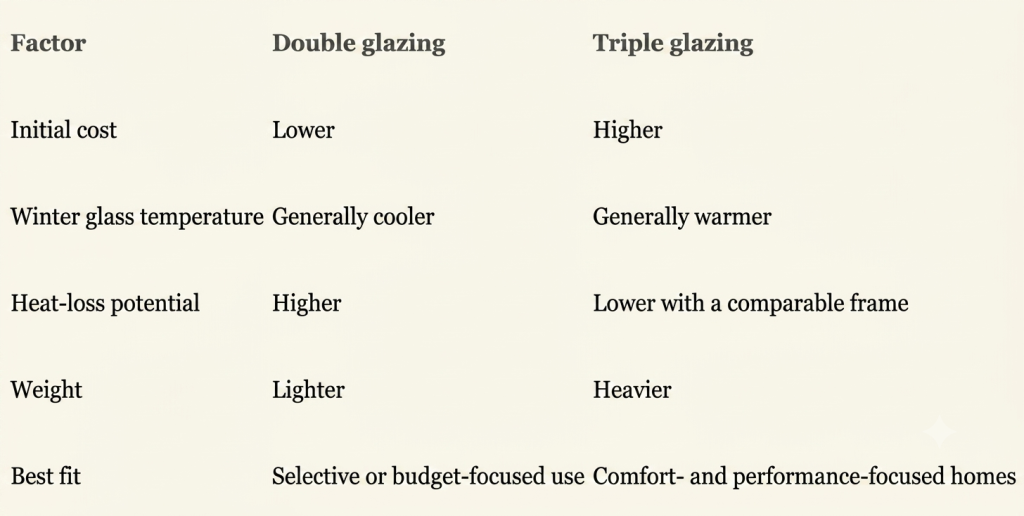
Triple glazing may also help with sound, but pane thickness, laminated glass, cavity design, seals, and wall construction matter more than pane count alone.
Match the Glass Package to Orientation
South-Facing Windows
South-facing glass can provide winter solar gain when roof overhangs or exterior shading manage summer sun. NRCan advises caution when passive-solar products with SHGC values above 0.45 face south.
East- and West-Facing Windows
Low-angle sun can create glare and overheating. West-facing rooms may need stronger solar control, exterior shading, or less glass.
North-Facing Windows
With less direct solar gain, low U-factor and interior-surface warmth usually become priorities.
Digital modelling can compare daylight, glazing area, and heat gain before ordering. This is one way technology improves custom-home design and construction.
Frame Material and Window Style Matter
Common frames include insulated vinyl, fibreglass, clad wood, composite systems, and thermally broken aluminum. Compare whole-window ratings because frame conductivity, reinforcement, seals, and dimensions affect the result.
Fixed windows have fewer potential leakage paths. Casements and awnings can form strong compression seals. Sliders and hung windows may suit particular rooms, but certified performance—not assumptions—should guide selection.
Window proportions should also support the architecture. Review modern luxury home styles in Ontario before finalizing muntins, frame colours, and opening configurations.
Installation Can Make or Break Performance
Premium glazing cannot correct an out-of-square opening, missing drainage, incomplete air sealing, distorted frames, or poor flashing.
A durable installation should coordinate a draining sill pan, head and jamb flashing, an interior perimeter air seal, thermal continuity, and correct placement within the insulated wall. Building Science Corporation recommends pan flashing below openings to collect incidental water and direct it outside, while preserving drainage at the sill.
Coordinate these details with the complete façade using these exterior design tips for luxury GTA homes.
Practical Ontario Custom-Home Example
Consider a hypothetical Oakville home with large west-facing living-room windows, north-facing bedroom glass, and south-facing windows beneath overhangs.
The design team might specify low-U-factor triple glazing throughout, stronger solar control on the west, a different Low-E package on the south, fixed units where ventilation is unnecessary, and casements where airflow is required.
That approach supports high-performance custom-home design trends in Ontario without paying for identical specifications where they add little value.
Questions to Ask Before Ordering
- Are the quoted ratings for the complete window?
- What are the certified U-factor, ER, SHGC, air-leakage, and condensation-resistance values?
- Does every elevation need the same Low-E coating?
- What gas fill, spacer, frame, and reinforcement are included?
- How will the opening be flashed and air-sealed?
- Is the hardware designed for triple glazing’s weight?
- Who covers glass, hardware, labour, installation, and seal failure?
An experienced builder should coordinate the architect, wall assembly, supplier, and installer. Learn more about why Woodcastle Homes is an ideal custom-home builder.
Frequently Asked Questions
Do Triple-Glazed Windows Prevent Condensation?
No. They can keep interior glass warmer, but indoor humidity, outdoor temperature, airflow, and installation still matter.
Is Argon or Krypton Better?
Krypton can perform well in narrow cavities but usually costs more. Certified whole-window performance matters more than the gas name.
Are Triple-Pane Windows Better for Noise?
Sometimes. Laminated glass, unequal pane thicknesses, cavity design, seals, and wall construction may have greater influence.
Are Triple-Glazed Windows Too Heavy?
Not when the frame and hardware are designed for them. Large operable units need careful sizing and durable hinges.
Should Every Window Use the Same Glass?
Not necessarily. Orientation, shading, room use, views, and cooling loads may justify different glass packages.
Choose the Whole Window, Not Just the Third Pane
Triple-glazed windows can be a smart investment for Ontario winters, especially in highly glazed or comfort-focused homes. The strongest results combine a low U-factor, suitable solar gain, airtight operation, an insulated frame, and careful installation.
Planning a custom home in Toronto, Oakville, Burlington, or elsewhere in the GTA? Contact Woodcastle Homes to compare triple-glazed systems, orientation-specific glass packages, and installation details designed for Ontario conditions.